


SEO for Law Firms: Ranking for High-Intent Legal Searches
Table of Contents
SEO for law firms is about ranking for high-intent legal searches where potential clients are actively looking for legal help. Unlike general SEO, law firm SEO focuses on trust, urgency, and visibility in competitive legal markets.
They struggle with being found at the exact moment someone decides they need legal help.
That moment is rarely calm. It’s often triggered by urgency, uncertainty, or fear. An accident. A conflict. A letter that shouldn’t be ignored. A situation where the stakes feel high and the margin for error feels small.
SEO for law firms is not about visibility in general.
It’s about being visible when intent is highest — and being trusted quickly enough to earn the next step.
This is where most legal SEO advice becomes misleading. Ranking alone doesn’t win clients. Relevance, clarity, and psychological safety do.
How People Search for Lawyers (High-Intent Legal Searches)
Legal searches are different from most other industries. People don’t browse.
They don’t explore options casually.
They search when something already went wrong — or might soon.
Typical high-intent legal searches sound like:
“personal injury lawyer near me”
“what to do after a car accident”
“divorce attorney consultation”
“criminal defense lawyer urgent”
“employment lawyer wrongful termination”
These searches are not informational in the abstract sense. They are situational. Someone is already inside the problem.
This means two things:
Ranking for these searches matters.
What happens after the click matters even more.
SEO that attracts the wrong tone, the wrong promise, or the wrong level of seriousness fails — even if it technically “works.”
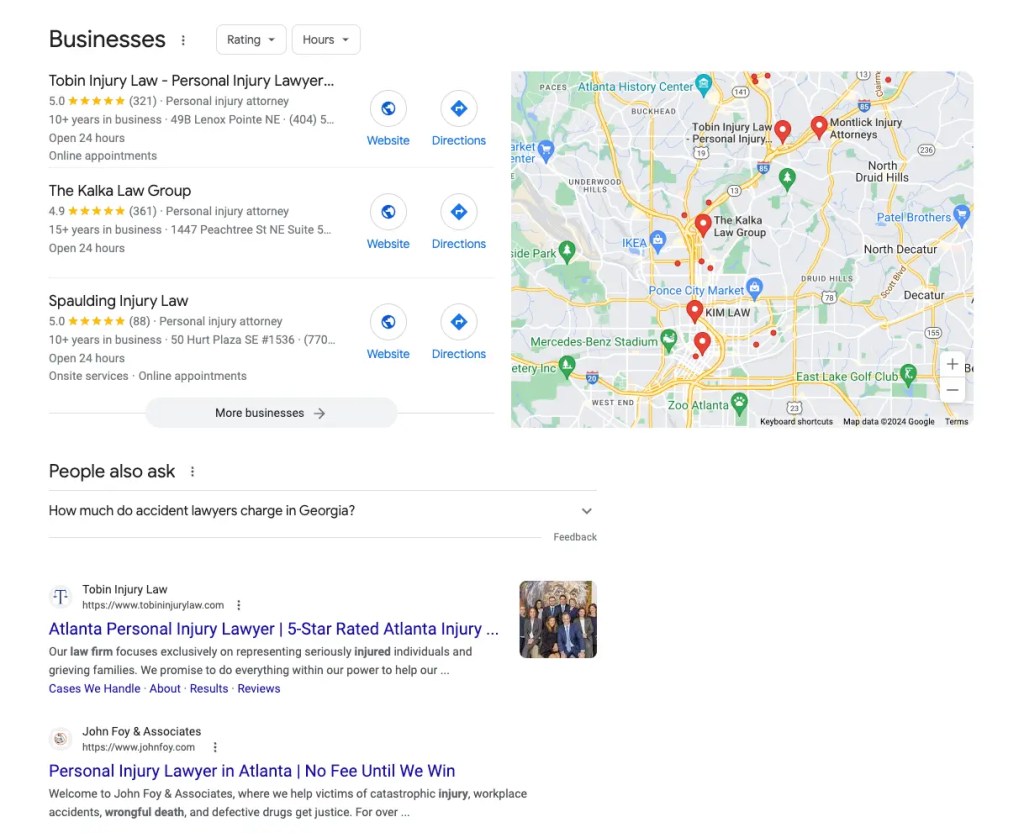
What High-Intent Legal Searches Mean in SEO for Law Firms
High-intent searches are not about curiosity. They are about decision-making under pressure.
The person searching is asking:
-
“Do I need a lawyer?”
-
“Is my situation serious?”
-
“Who won’t make this worse?”
-
“Who knows what they’re doing?”
This is why legal SEO is not just a technical exercise. It is a trust exercise.
Your website is not competing with other law firm websites.
It’s competing with fear, confusion, and hesitation.
SEO for Law Firms Starts With Relevance (Before Rankings)
1. Practice-area specificity is non-negotiable
Many law firm websites try to rank for broad terms:
“law firm”
“attorneys near me”
“legal services”
These terms are competitive and vague. More importantly, they don’t reflect how people think when they’re in trouble.
High-intent SEO works when:
each practice area has its own page
each page addresses one clear legal situation
language reflects the client’s lived experience
For example:
“Personal Injury Law” is generic
“Car Accident Injury Lawyer” is recognizable
Specificity doesn’t limit opportunity.
It signals relevance.
2. Local intent is built into almost every legal search
Most people want a lawyer who is:
licensed in their jurisdiction
familiar with local courts
physically accessible if needed
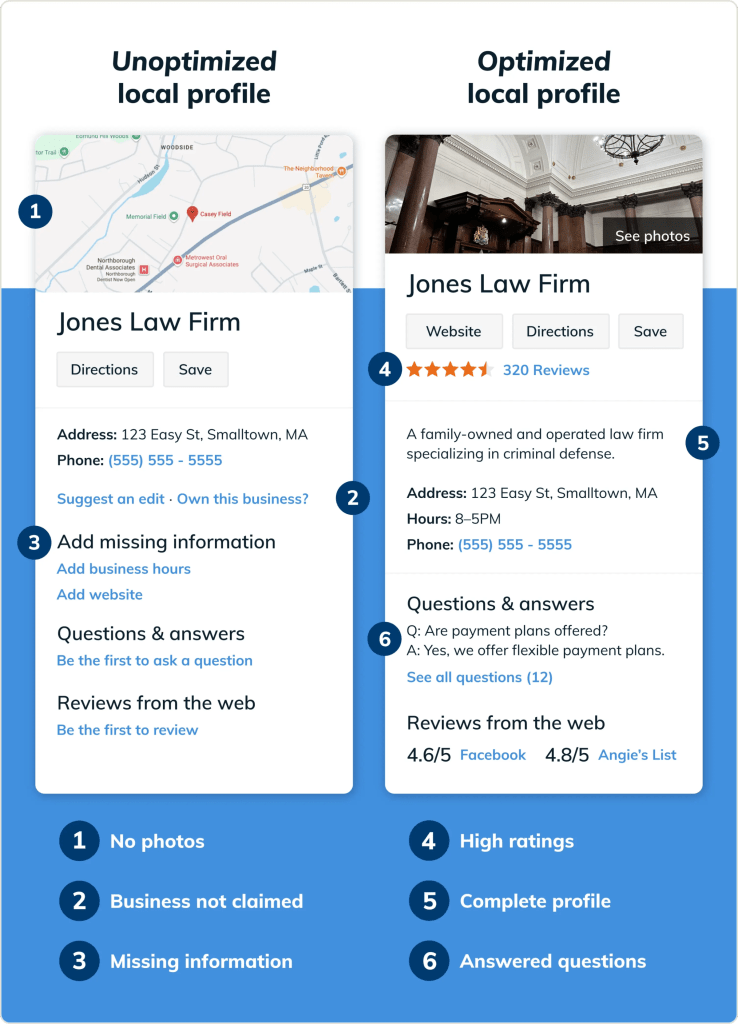
This makes local SEO essential, not optional.
That includes:
accurate Google Business Profiles
consistent name, address, phone number
localized content that reflects jurisdiction
When location is unclear or inconsistent, trust erodes — quietly, but decisively.
Law Firm SEO Content That Supports Decision-Making
1. Legal content must reduce uncertainty
Clients don’t come to law firm websites for inspiration. They come for orientation.
Effective legal SEO content:
explains what typically happens next
clarifies timelines
outlines risks without dramatizing them
distinguishes between urgent and non-urgent situations
This doesn’t require legal advice. It requires context. Context turns anxiety into understanding. Understanding creates movement.
2. Authority comes from explanation, not assertion
Many law firm websites rely heavily on statements like:
“experienced attorneys”
“aggressive representation”
“proven results”
These claims are expected — and therefore ignored.
Authority in legal SEO is built when:
complex processes are explained simply
legal terms are translated into plain language
expectations are set realistically
If a potential client feels slightly more informed after reading your content, trust increases — even before they contact you.
Technical SEO for Law Firms Builds Trust
Yes, technical SEO matters:
-
fast load times
-
mobile usability
-
secure infrastructure
-
clean navigation
But in law, the impact is psychological as much as technical.
A slow, broken, or outdated site suggests:
“Details might be overlooked here.”
For someone facing legal risk, that perception is enough to move on.
Technical SEO is not optimization for search engines.
It is reassurance for humans.
Law Firm SEO Keywords: Match Language, Don’t Chase Volume
High-intent legal keywords tend to be:
-
longer
-
more specific
-
more emotionally charged
Examples:
-
“do I need a lawyer after car accident”
-
“what happens if I miss a court date”
-
“can I be fired for this”
These are not “marketing keywords.”
They are decision keywords.
Effective legal SEO reflects:
-
how people phrase problems
-
not how law firms describe services
When language aligns, relevance feels immediate.
Tone in SEO for Law Firms: The Invisible Conversion Factor
Two law firm websites can rank equally well.
One feels:
rushed
aggressive
sales-driven
The other feels:
calm
clear
measured
The second one wins — almost every time.
High-intent legal searches require a tone that communicates:
seriousness without intimidation
confidence without bravado
care without emotional manipulation
People don’t want to be convinced.
They want to feel steady.
Tone doesn’t show up in keyword reports — but it shows up in conversion rates.
What SEO for Law Firms Should Not Do
SEO should not:
promise outcomes
exaggerate urgency
create fear to drive action
These tactics may increase clicks, but they damage trust.
Legal clients remember how they felt when choosing a lawyer.
Pressure at the wrong moment becomes a red flag.
Ethical, sustainable legal SEO respects the emotional state of the searcher.
The Real Goal of SEO for Law Firms (High-Intent Searches)
The real goal is not traffic. It’s qualified clarity.
When legal SEO works well:
-
the right clients find you
-
they understand their situation better
-
they know what to expect
-
they feel safe reaching out
Initial consultations become more focused. Conversations start at a higher level.
Relationships begin with trust, not confusion.

Final Thought: SEO for Law Firms Is About Responsible Visibility
SEO for law firms is not about dominating search results.
It’s about showing up responsibly when someone is facing a decision that matters.
High-intent legal searches are moments of vulnerability.
How you appear in those moments — your language, structure, tone, and clarity — speaks louder than any ranking position.
When your online presence respects that reality, clients don’t just find you.
They choose you.

About the Author
Nicky Huseynova
Founder & CEO, Optimum DMA
Nicky Huseynova is the Founder and CEO of Optimum DMA, a digital marketing agency focused on helping service-based businesses grow through strategic websites, SEO, and content marketing. She has worked with hundreds of U.S.-based businesses across a wide range of industries and has successfully led the launch of hundreds of websites.
Her work combines clear strategy, thoughtful execution, and a strong understanding of how people search, think, and make decisions online. From website development to SEO and content marketing systems, Nicky helps businesses build visibility, trust, and long-term growth.
 Connect on LinkedIn
Read Other Pro Tips

The Content Roadmap 2026: A Monthly SEO & Content Guide for Growing Professional Firms
Nicky H.
March 24, 2026



Local SEO for Law Firms: How to Show Up When Clients Search “Near Me”
Nicky H.
March 11, 2026

Blogging for Consultants: Build Authority & Attract Clients in 2026
Nicky H.
March 9, 2026
Whether you need a new website, SEO, or content strategy — we’re here to help.
We typically respond within 24 hours.
- 646-262-1142
- nicky@optimumdma.com
- Hell's Kitchen, NY 10019