


The 8-Page Website Formula: What Every Business Website Actually Needs
Table of Contents
Let’s play a quick game called: “Is this website built to make money… or to exist?”
Because a lot of business websites are basically digital brochures from 2009 that somehow survived.
They have:
- A homepage that says “Welcome to our website” (groundbreaking),
- A menu full of random pages like “Mission” and “Gallery-2,”
- And a contact form that feels like it’s going to fax your message to 1997.
If you’re a service business (agency, contractor, consultant, lawyer, accountant, coach, clinic, etc.), your website has one job:
Turn strangers into leads without making them work for it.
So here’s the formula I use over and over because it works: 8 core pages. No fluff. No ego pages. No “Our Vision” unless it actually helps someone hire you.
And yes, we’ll mention other website types too—because not everyone needs the same setup. But this article is mainly for service businesses trying to get calls, bookings, and quote requests.
First: What “type” of website are we even building?
Different goals = different page structure.
Here are the common types:
- Service business website (what we’re focusing on)
Goal: bookings, calls, quote requests. - E-commerce website
Goal: sell products online, handle checkout, shipping, returns. - Portfolio / personal brand
Goal: show work, credibility, get hired. - SaaS / product website
Goal: demos, trials, product education, onboarding. - Local business / multi-location
Goal: calls, directions, local SEO, service areas. - Content site / media / blog-first
Goal: traffic, subscribers, ads, affiliate revenue.
All valid. But if you run a service business and you copy an e-commerce layout, you’ll confuse people. And confused people don’t convert. They leave.
Why 8 pages works (and why “one-page website” often doesn’t)
Service businesses need to answer a few things fast:
- What do you do?
- Who is it for?
- Can I trust you?
- How do I start?
- Do you do my specific thing? (This is why service pages matter.)
Also: from an SEO standpoint, having clear service pages + internal linking helps Google understand what you offer and how pages relate. Google literally tells site owners to make links crawlable and use descriptive anchor text—because internal links help discovery and understanding.
So no, you don’t need 47 pages.
But you also don’t need a single scrolling page that tries to explain your entire business in 9 miles of text. People won’t read it. Even your mom won’t.
The 8-page website formula (service business edition)
1) Homepage (Your “don’t make me think” page)
Your homepage is not your life story. It’s your best shot at telling a stranger:
“You’re in the right place, and here’s what to do next.”
A good homepage typically includes:
- Clear headline (what you do + who it’s for)
- Quick services overview
- Proof (testimonials, logos, results, case studies)
- Why you (your differentiator)
- Clear CTA (book a call / get a quote / contact)
- Links to service pages and top content
These are common “must-have” homepage elements in conversion-focused guidance.

Pro tip: If your homepage headline could apply to 10,000 businesses (“We deliver innovative solutions”), it’s not a headline. It’s a nap.
2) About (The trust page, not the autobiography)
People absolutely check About pages when deciding whether to trust a company. UX research highlights that About content should be clear, authentic, and transparency-driven—because trust affects whether users engage.
What your About page should include:
- Who you help + what you do (again, but human)
- Your approach / values (short, not cringe)
- Why you’re qualified (experience, results, credentials)
- Photos of real humans (if possible)
- A CTA (book / contact)
What it should NOT be:
A 2,000-word “once upon a time” story with zero relevance to the customer.

3) Services Overview (The menu)
This page is a clean overview: what you offer, in a way people can scan in 10 seconds.
Include:
- A short intro (who the services are for)
- 3–8 service “cards” with short descriptions
- Links to each service page
- CTA at top and bottom
This page also helps your internal linking and site structure (again: Google likes clear, crawlable linking).

4–6) Individual Service Pages (Yes, each service needs its own page)
This is where most business websites fail.
They list services on one page like:
- Web Design
- SEO
- Branding
- PPC
- Done.
That’s not a sales page. That’s a grocery list.
Each core service deserves its own page because:
- People search for specific services (“Shopify developer”, “SEO for accountants”, “kitchen remodel quote”)
- Each service needs its own explanation, proof, FAQs, and CTA
- It improves relevance and internal linking
On each service page, include:
- What the service is (plain English)
- Who it’s for (ideal clients)
- What’s included (deliverables)
- Timeline / process
- Proof (examples, results, testimonials)
- FAQs
- CTA (book a call / request quote)
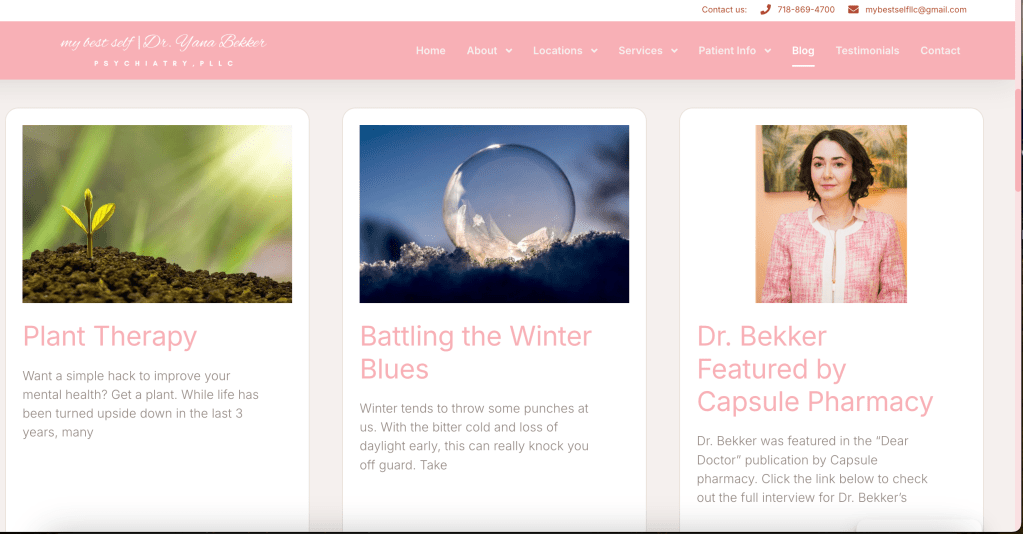
7) Blog (Your long-term traffic engine)
A blog is not “optional” if you want SEO and authority long-term. It’s how you:
- Answer questions people Google
- Build trust before they contact you
- Support service pages with related content (topic clusters)
Internal linking strategy matters: linking related pages helps people navigate and helps search engines understand relationships between pages. That’s a key theme across SEO guidance.
Minimum blog plan for service businesses:
- At least 3 strong blog posts to start
- Better: 1 blog post per service (so each service page has supporting content)
Example for an SEO service page:
- “What SEO actually includes (and what’s a scam)”
- “SEO timelines: when you’ll see results”
- “Local SEO checklist for [industry]”
Then link those posts to the SEO service page and link back from the service page to the best post. That’s your little internal-linking power couple.
8) Contact (The conversion page everyone under-builds)
A contact page should do more than display an email like it’s a sacred artifact.
Strong contact pages reduce friction and can act like a customer-service and conversion tool, not a dead-end page.
Include:
- Short form (name, email, message) — keep it simple
- Clear next steps (“We reply in 1 business day”)
- Other contact methods (email, phone, scheduling link)
- Location/service area (if relevant)
- Links to FAQs or “How it works” if you get repetitive questions
And please: don’t make your form ask for their blood type and astrological sign. You’re not the government.
Bonus pages (not in the 8, but often smart)
Depending on your business, these help:
- Portfolio / Case Studies (if results are visual or measurable)
- Testimonials / Reviews
- FAQ (especially for high-ticket services)
- Privacy Policy / Terms (yes, you should have them)
A simple site map (service business example)
Here’s the clean structure:
- Home
- About
- Services
- Service 1
- Service 2
- Service 3
- Blog
- Blog post 1 (supports Service 1)
- Blog post 2 (supports Service 2)
- Blog post 3 (supports Service 3)
- Contact
That’s it. That’s the machine.
The “real business” checklist
If you want your site to feel legit (and convert), make sure every page has:
- A clear goal (what should the visitor do here?)
- A CTA
- Proof (even small proof)
- Internal links to the next logical step (service → contact, blog → service, etc.)
Final thought
If your website is missing service pages and a blog, you’re basically telling Google and your customers:
“I do things. Figure it out.”
They won’t.
👉 Get a No-BS Content & SEO Audit
Worst case?
You get clarity.
Best case?
Your content finally starts doing its job.

About the Author
Nicky Huseynova
Founder & CEO, Optimum DMA
Nicky Huseynova is the Founder and CEO of Optimum DMA, a digital marketing agency focused on helping service-based businesses grow through strategic websites, SEO, and content marketing. She has worked with hundreds of U.S.-based businesses across a wide range of industries and has successfully led the launch of hundreds of websites.
Her work combines clear strategy, thoughtful execution, and a strong understanding of how people search, think, and make decisions online. From website development to SEO and content marketing systems, Nicky helps businesses build visibility, trust, and long-term growth.
 Connect on LinkedIn
Read Other Pro Tips
The Content Roadmap 2026: A Monthly SEO & Content Guide for Growing Professional Firms
Nicky H.
March 24, 2026


Whether you need a new website, SEO, or content strategy — we’re here to help.
We typically respond within 24 hours.
- 646-262-1142
- nicky@optimumdma.com
- Hell's Kitchen, NY 10019